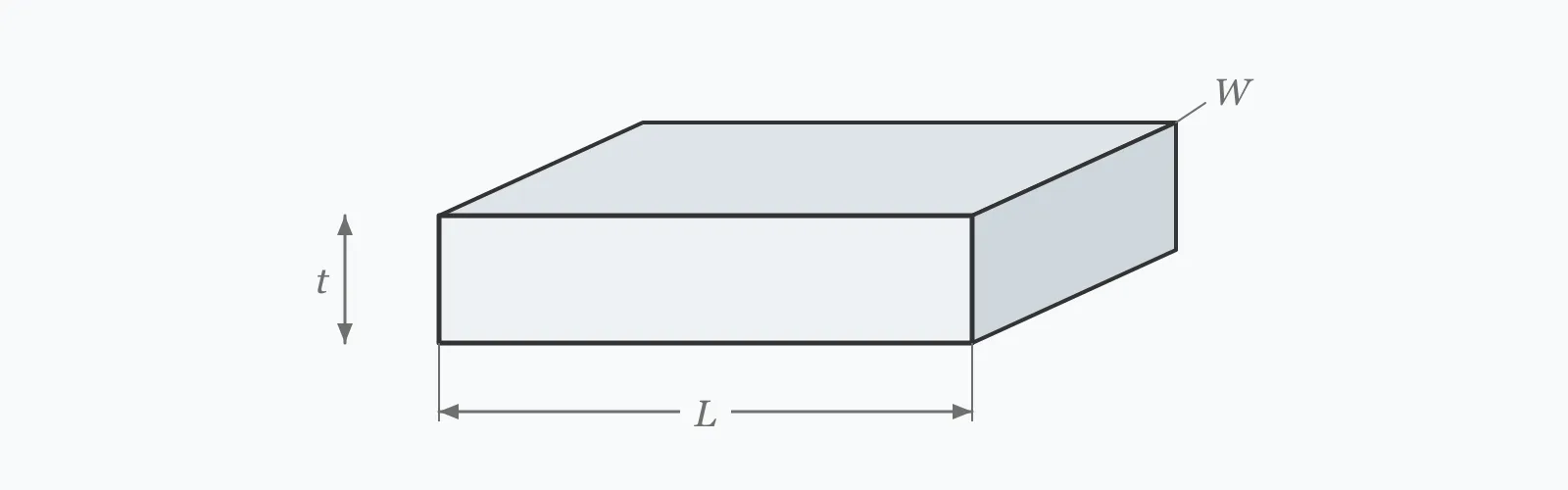
Asphalt is specified by compacted thickness but ordered by weight, so a density assumption sits between the two. Enter the area, the finished thickness, the mix density and a wastage allowance to get the compacted volume, the tonnage to order, the loose depth to lay at, and an estimated cost.
Calculator
Units:
m²
Surface area to be paved
mm
Finished depth after rolling
t/m³
Dense asphalt concrete 2.3–2.4; porous mixes considerably less
%
5 to 10% for trimming, joints and hopper residue
per t
Delivered rate for the mix
Calculation Result
Press Calculate for the compacted volume, the tonnage including wastage, the loose depth to lay at to finish at the specified thickness, and an estimated cost.
Step-by-Step Solution
Preliminary design aid. Results follow the published formulas cited
below and are intended for estimating, study and early design. Final design must be
verified by a licensed Professional Engineer against the code in force for your project.
Key Benefits
✓Converts thickness to tonnage through an explicit density
✓Gives the loose laying depth, which is what the paver is set to
✓Includes a wastage allowance rather than leaving it implicit
✓Warns where the layer is too thin or too thick to compact properly
✓Sensitivity chart shows tonnage scaling directly with thickness
✓Shareable links and CSV export for ordering records
What Is Asphalt Tonnage?
Asphalt is specified as a compacted thickness — the finished depth after rolling — but supplied by the tonne. The bridge between them is the compacted density of the mix, typically 2.3 to 2.4 t/m³ for dense asphalt concrete. Multiplying area by thickness gives the compacted volume, and multiplying that by density gives the weight to order.
Loose against compacted depth
Material leaves the paver at roughly 1.25 times its finished depth and is rolled down to specification. A 50 mm compacted layer is laid at about 62.5 mm loose. Screed operators work to the loose figure and it is checked with a depth gauge behind the paver, which is why quoting only the compacted thickness on a drawing leaves the most operationally useful number unstated.
Why layer thickness has limits at both ends
A layer must be at least two to three times the maximum aggregate size to compact properly — a 20 mm aggregate mix needs 40 to 60 mm, and thinner than that the stones interlock against each other rather than rearranging. At the other end, above about 100 mm a single lift cannot be compacted uniformly through its depth, so the surface finishes correctly while the bottom stays loose.
Formula
Tonnage = Area × (t / 1000) × ρ
Tonnage from area in m², compacted thickness in mm and density in t/m³
Related Formulas
Tonnage_ordered = Tonnage × (1 + waste/100)
t_loose ≈ 1.25 × t_compacted
Coverage = 1 / (ρ · t/1000)
Variable Definitions
Symbol
Variable
Unit
Description
A
Area
m²
Surface area to be paved.
t
Compacted Thickness
mm
Finished depth after rolling, as specified.
ρ
Compacted Density
t/m³
2.3 to 2.4 for dense asphalt concrete; less for porous or lightweight mixes.
w
Wastage Allowance
%
5 to 10% typically, for trimming, joints and hopper residue.
t_loose
Loose Depth
mm
Laying depth before compaction, about 1.25 times the finished thickness.
How to Use This Calculator
Use the density of the actual mixIt is the whole conversion. Dense asphalt concrete is 2.3 to 2.4 t/m³, but porous asphalt, stone mastic and lightweight mixes differ substantially. The mix design states it, and assuming a generic figure introduces an error straight into the order.
Enter the compacted thicknessThat is what the specification gives and what the finished layer is measured at. The calculator returns the loose depth separately, which is what the paver screed is set to.
Check the thickness against the aggregate sizeA layer must be at least two to three times the maximum aggregate size to compact. A 20 mm mix needs 40 to 60 mm of layer, and below that the stones cannot rearrange no matter how much rolling is applied.
Allow 5 to 10% wastageEdge trimming, joint preparation, level tolerance and the material left in the paver hopper all consume asphalt. Running short mid-lay forces a cold joint, which is a permanent weakness in the surface.
Order in whole loadsAsphalt arrives by lorry and cannot be stored — it must be laid hot. Round the order up to whole loads and plan the sequence so any surplus goes somewhere useful rather than cooling in the wagon.
Worked Examples
Example 1
A 500 m² car park surfaced with 50 mm of dense asphalt concrete at 2.35 t/m³, with 5% wastage, at 95 per tonne.
Step-by-Step Solution
Compacted volume: 500 m² × 0.050 m = 25.00 m³
Tonnage: 25.00 × 2.35 = 58.75 t
With 5% wastage: 58.75 × 1.05 = 61.69 t
Loose laying depth: 50 × 1.25 = 62.5 mm, to finish at 50 mm after rolling
Estimated cost: 61.69 × 95 = 5,860
Coverage: one tonne lays 1/(2.35 × 0.050) = 8.51 m² at this thickness
Interpretation: 61.69 t is about three standard 20 t loads. Ordering three gives 60 t — just short — so four loads or a part load is needed, and that decision is better made before the paver starts than during.
Example 2
The same area at different thicknesses, and what a density error costs.
Step-by-Step Solution
At 40 mm: 20.00 m³, 49.35 t ordered, laid at 50 mm loose
At 50 mm: 25.00 m³, 61.69 t, laid at 62.5 mm
At 60 mm: 30.00 m³, 74.03 t, laid at 75 mm
At 100 mm: 50.00 m³, 123.38 t, laid at 125 mm
Everything scales in direct proportion to thickness — doubling from 50 to 100 mm exactly doubles the tonnage from 61.69 to 123.38 t.
Now consider the density. At 50 mm with a mix density of 2.20 rather than 2.35 t/m³, the tonnage falls to 57.75 t — 6.4% less.
That 6.4% is nearly 4 tonnes on this modest job, and it is entirely an assumption rather than a measurement. On a large contract the same proportional error runs into hundreds of tonnes.
The 100 mm case carries a separate problem the arithmetic does not show: a single 100 mm lift is at the limit of what a roller compacts uniformly. It should be laid in two layers, or the surface will finish correctly over an under-compacted base.
Thickness Sensitivity
Tonnage and cost rise in direct proportion to thickness — every line is straight through the origin. That linearity is why a small error in the specified depth translates one-for-one into the order. The marker shows your current thickness.
Tonnage to Order vs Compacted Thickness
Recomputed live from your inputs. The marker shows your current value.
Line chart of Tonnage to Order against Compacted Thickness. The same
values are listed in the data table below.
Values plotted above, sampled across the compacted thickness range.
How to Interpret Your Results
Tonnage is what gets ordered; the loose depth is what gets laid. The thickness needs checking against both the aggregate size below and the compaction limit above.
compactedThickness: < 30Thin layer — check the aggregate size
A compacted thickness of your result mm is thin. The layer must be at least two to three times the maximum aggregate size, so this suits only a fine-graded surface course. A coarser mix at this depth cannot be compacted.
Tonnage to Order: < 20Small job — one load
A tonnage of your result t is around one lorry load. At this scale the delivery and plant mobilisation dominate the cost, and laying by hand rather than by paver may be more practical.
Tonnage to Order: 20 – 200Typical paving job
A tonnage of your result t is a normal day's work for a paving crew. Plan the load sequence so the paver is never waiting — a gap in supply means a cold joint, which is a permanent weakness.
Tonnage to Order: ≥ 200Large quantity — plan the logistics
At your result t the delivery schedule matters as much as the quantity. Asphalt cannot be stored and must be laid hot, so haul distance, plant capacity and lorry turnaround all constrain what can be achieved in a shift.
Loose Laying Depth: ≥ 125Thick lift — consider two layers
A loose depth of your result mm is more than most rollers can compact uniformly through its full depth. Above about 100 mm compacted, the layer should be split into two lifts or the bottom will remain under-compacted while the surface looks finished.
Common Mistakes to Avoid
Assuming a generic density
Why it matters:Density is the entire conversion from thickness to weight. The difference between 2.20 and 2.35 t/m³ is 6.4% of the order — nearly 4 tonnes on a 500 m² car park, and proportionally more on anything larger.
✓How to avoid it:Take the compacted density from the mix design. Porous asphalt, stone mastic and lightweight mixes all differ materially from dense asphalt concrete.
Setting the paver to the compacted thickness
Why it matters:Material must be laid about 1.25 times deeper than the finished depth so that rolling brings it to specification. Laying at the compacted figure produces a layer 20% thin after compaction.
✓How to avoid it:Set the screed to the loose depth and check behind the paver with a depth gauge before rolling.
Specifying a layer too thin for the aggregate
Why it matters:Below two to three times the maximum aggregate size, the stones interlock against each other instead of rearranging, and the layer will not reach density however much it is rolled. The result is a porous, short-lived surface.
✓How to avoid it:Match the mix to the layer. A 20 mm mix needs 40 to 60 mm; a thinner layer needs a finer-graded material.
Laying too thick in one lift
Why it matters:Compaction energy attenuates with depth, so above about 100 mm the surface reaches density while the base does not. The layer looks correct and fails from the bottom.
✓How to avoid it:Split thick construction into two lifts. This is the same principle as compacting earthworks in layers, and for the same reason.
Ordering the exact calculated tonnage
Why it matters:Asphalt cannot be stored and cannot be topped up later without a cold joint. Running short mid-lay leaves a permanent transverse weakness in the surface, which is where failure usually begins.
✓How to avoid it:Add 5 to 10% and round up to whole loads. Surplus is a smaller problem than a shortfall, and it can often be used elsewhere on site.
Ignoring the temperature window
Why it matters:Asphalt must be laid and compacted within a temperature range. Too cold and it cannot be compacted; the roller passes over material that has already stiffened, and the density is never achieved.
✓How to avoid it:Plan the haul distance and the laying sequence around the mix's temperature window. On cold or windy days that window shortens considerably.
Practical Applications
▸Ordering asphalt for car parks, driveways and roads
▸Converting a specified thickness into a delivered tonnage
▸Setting the paver screed to the correct loose depth
▸Estimating paving cost from area and specification
▸Checking a supplier's quantity against the drawing
▸Comparing layer thickness options
Industry Use Cases
Road construction
Pavement layers are specified by compacted thickness and paid by tonne, so the density used in the conversion is contractually significant. Core samples taken after laying verify both the thickness achieved and the density, and either can trigger a deduction.
Car parks and estate roads
Typical construction is a binder course under a surface course, laid in separate lifts because a single layer of the combined thickness could not be compacted. The two-lift approach also lets the joints be staggered between layers.
Maintenance and overlay
Overlays are constrained by kerb and gully levels as much as by structural need, which frequently sets a thinner layer than would be preferred. A fine-graded mix is then required so the layer is still several times the aggregate size.
Expert Tips
💡Density is the whole conversion — take it from the mix design.
💡Lay at about 1.25 times the finished thickness and roll down to it.
💡A layer must be two to three times the maximum aggregate size.
💡Above about 100 mm compacted, split into two lifts.
💡One tonne covers 8.51 m² at 50 mm and 2.35 t/m³.
💡Asphalt cannot be stored — order whole loads and plan the sequence.
Advantages & Limitations
Advantages
✓Makes the density assumption explicit rather than buried in a rule of thumb
✓Gives the loose laying depth, which is the operationally useful figure
✓Includes wastage, which is always needed and often forgotten
✓Warns at both the thin and thick limits on layer thickness
✓Fast enough to check a supplier's quantity before ordering
Limitations
!Assumes a uniform thickness over the whole area
!Density must be supplied and is the dominant source of error
!The 1.25 compaction factor is typical, not universal — it varies with mix and plant
!Takes no account of levelling course or regulating material on an uneven base
!Does not address the binder course, base or subbase beneath
!Ignores kerbs, gullies and edge details that reduce the paved area
!Cost is an indication only and excludes plant, labour and preparation
Thickness, Tonnage and Laying Depth
500 m² at 2.35 t/m³ with 5% wastage. Everything scales in direct proportion, which is why a thickness error transfers one-for-one into the order.
500 m², dense asphalt concrete at 2.35 t/m³, 5% wastage. Doubling the thickness from 50 to 100 mm exactly doubles the tonnage. The 100 mm row should be laid in two lifts — a single layer that deep cannot be compacted uniformly.
Multiply area by compacted thickness in metres to get volume, then by the mix density. 500 m² at 50 mm and 2.35 t/m³ gives 58.75 t, or 61.69 t with 5% wastage.
What is the density of asphalt?
Dense asphalt concrete is typically 2.3 to 2.4 t/m³ compacted. Porous asphalt, stone mastic and lightweight mixes are lower, sometimes considerably so — take the figure from the mix design.
How much area does a tonne of asphalt cover?
It depends entirely on thickness. At 2.35 t/m³, one tonne covers 8.51 m² at 50 mm, 10.64 m² at 40 mm and 4.26 m² at 100 mm.
What is the loose laying depth?
About 1.25 times the compacted thickness. A 50 mm finished layer is laid at 62.5 mm and rolled down, which is the depth the paver screed is set to.
How thin can an asphalt layer be?
At least two to three times the maximum aggregate size. A 20 mm mix needs 40 to 60 mm; below that the stones cannot rearrange and the layer will not reach density.
How thick can one lift be?
About 100 mm compacted. Beyond that a roller cannot compact uniformly through the depth, so the surface finishes correctly over an under-compacted base. Thicker construction is laid in two lifts.
How much wastage should I allow?
5 to 10%. Edge trimming, joint preparation, level tolerance and material left in the hopper all consume asphalt, and running short mid-lay forces a permanent cold joint.
Why can't I order the exact quantity?
Asphalt arrives hot and cannot be stored, so it must all be laid the same day. A shortfall means the paver stops and the joint where it restarts is a permanent weakness.
What is a cold joint?
The junction where fresh asphalt meets material that has already cooled. It cannot bond fully, so it becomes a line of weakness where water enters and failure usually begins.
Does asphalt need to be laid at a particular temperature?
Yes. It must be compacted within a temperature window, and material that has cooled below it cannot reach density however much it is rolled. Cold and windy conditions shorten the window considerably.
Glossary
Compacted thickness
The finished depth of an asphalt layer after rolling, as specified.
Loose depth
The depth material is laid at before compaction, about 1.25 times the finished thickness.
Dense asphalt concrete
A continuously graded asphalt mix, typically 2.3 to 2.4 t/m³ compacted.
Surface course
The uppermost asphalt layer, providing skid resistance and weatherproofing.
Binder course
The layer beneath the surface course, providing most of the structural depth.
Cold joint
A junction with material that has already cooled, unable to bond fully.
Maximum aggregate size
The largest stone in the mix, which sets the minimum practical layer thickness.
Lift
A single layer of material laid and compacted before the next.
Screed
The part of the paver that strikes off the asphalt at the set depth.
Regulating course
Material laid to correct level irregularities before the main layers.
Scientific & Standards References
BS EN 13108 — Bituminous mixtures: Material specifications — British Standards Institution
Manual of Contract Documents for Highway Works, Volume 1, Series 900 — Road Pavements: Bituminous Bound Materials — National Highways
Asphalt Institute MS-22 — Construction of Hot Mix Asphalt Pavements — Asphalt Institute
BS 594987 — Asphalt for roads and other paved areas: Transport, laying and compaction — British Standards Institution
EAPA — Asphalt in Figures and Technical Guidance — European Asphalt Pavement Association
Conclusion
Converting a specified thickness into a delivered tonnage is one multiplication, and the density carries all of it. The difference between 2.20 and 2.35 t/m³ is 6.4% of the order — nearly four tonnes on a 500 m² car park and proportionally more on anything larger — so it is worth taking from the mix design rather than from memory. Everything else in the table scales linearly with thickness, which makes the arithmetic easy and the consequences of a specification error direct. Two limits bound the layer from either side. Below two to three times the maximum aggregate size the stones cannot rearrange and the layer never reaches density; above about 100 mm compacted a roller cannot reach the bottom of the lift, so the surface finishes correctly over material that did not. And because asphalt cannot be stored, the order should be rounded up to whole loads — a surplus is a much smaller problem than the cold joint a shortfall creates.
Enter your area, thickness and mix density above to get the tonnage to order.